
In 2025, AI isn’t just hype — it’s here.
It’s screening job applicants. Approving loans. Diagnosing diseases. Shaping criminal justice decisions.
But here’s the truth no one likes to admit:
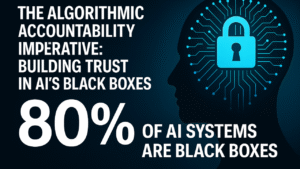
Most of us — even experts — don’t actually know how these AI systems make decisions.
We’re entrusting major life outcomes to “black box” models whose logic is invisible to the people they impact. This isn’t science fiction — it’s a crisis of trust unfolding right now. And it’s costing individuals, businesses, and governments more than we realize.
⚠️ The Real Risk: When Bias Goes Unchecked
Behind every AI system is data. And behind data are people — with their histories, preferences, and biases.
🔸 A hiring AI that favors certain universities
🔸 A medical AI trained mostly on male patients
🔸 A credit scoring model that penalizes zip codes
These aren’t hypothetical. They’re real-world examples of algorithmic bias in action. And when systems lack transparency, we don’t even realize when discrimination is happening — until it’s too late.
🎯 Why it matters:
- Unfair Outcomes: Bias gets coded into decisions that impact lives.
- Zero Accountability: People can’t appeal or understand AI-driven decisions.
- Regulatory Exposure: Companies face growing legal and ethical scrutiny.
- Loss of Public Trust: Without trust, AI adoption slows — innovation stalls.
✅ The Way Forward: Algorithmic Accountability
The good news? This isn’t a hopeless problem.
We don’t need to stop using AI — we need to build it responsibly. That starts with algorithmic accountability: a set of practices that make AI systems explainable, auditable, and fair.
Here’s how:

🧠 1. Explainable AI (XAI) Is Not Optional
For Engineers: Build models that provide transparent reasoning by leveraging tools such as:
- Model-agnostic techniques (e.g., LIME, SHAP)
- Feature importance charts
- Counterfactual examples (“what would need to change for a different result?”)
For Business Leaders: Don’t settle for “black box” vendors. Ask:
- Can we understand and explain the decisions made by this system?
- Is this interpretable by our legal and compliance teams?
Bottom line: Trustworthy AI is explainable AI.
⚖️ 2. Bias Detection & Mitigation at Every Stage
For Data Scientists: Audit datasets for imbalance. Test models with fairness metrics. Use diverse training data. Monitor in real-time post-deployment.
For Executives: Invest in diverse data teams. Create incentives for ethical data practices. Make fairness a KPI, not a “nice-to-have.”
Garbage in = garbage out. Bias starts at the data level.
🤝 3. Keep Humans in the Loop
For Developers: Design AI systems with checkpoints where human review can override or validate decisions. Build intuitive dashboards for transparency.
For Operations & Compliance Teams: Establish protocols: When must a human review be involved? Train teams to question the system — not blindly follow it.
AI is powerful — but it should never replace human judgment where ethics are involved.
🏛️ 4. Embrace Emerging Standards & Regulations
For Technical Experts: Collaborate with open-source AI ethics communities. Contribute to evolving standards.
For Policymakers & Leaders: Support regulations like:
- GDPR & data privacy frameworks
- Algorithmic transparency acts
- AI audit requirements
Regulation isn’t the enemy of innovation — it’s the foundation of responsible scaling.
🛤️ The Path Forward: Collaboration Is Key
Solving this doesn’t fall on any one group. It’s a shared responsibility:
- 🔧 Developers must build with ethics and transparency in mind
- 💼 Business leaders must demand accountability and allocate resources
- 🏛️ Governments must legislate and enforce fairness
- 🌍 The public must stay informed and ask questions
AI is the most powerful tool of our time. But its real value won’t come from complexity — it will come from trust.
💬 Over to You:
Would you trust an AI system to make a decision about your job, health, or finances — today? What do you think is the most important step in building ethical, explainable AI?
👇 Let’s have the conversation in the comments.
🔁 Share this post if you believe in building AI for everyone — not just for the few who understand the code.